Lighting
Low-Voltage LED vs. Solar Outdoor Lighting
Compare professional low-voltage LED landscape lighting against solar lights.
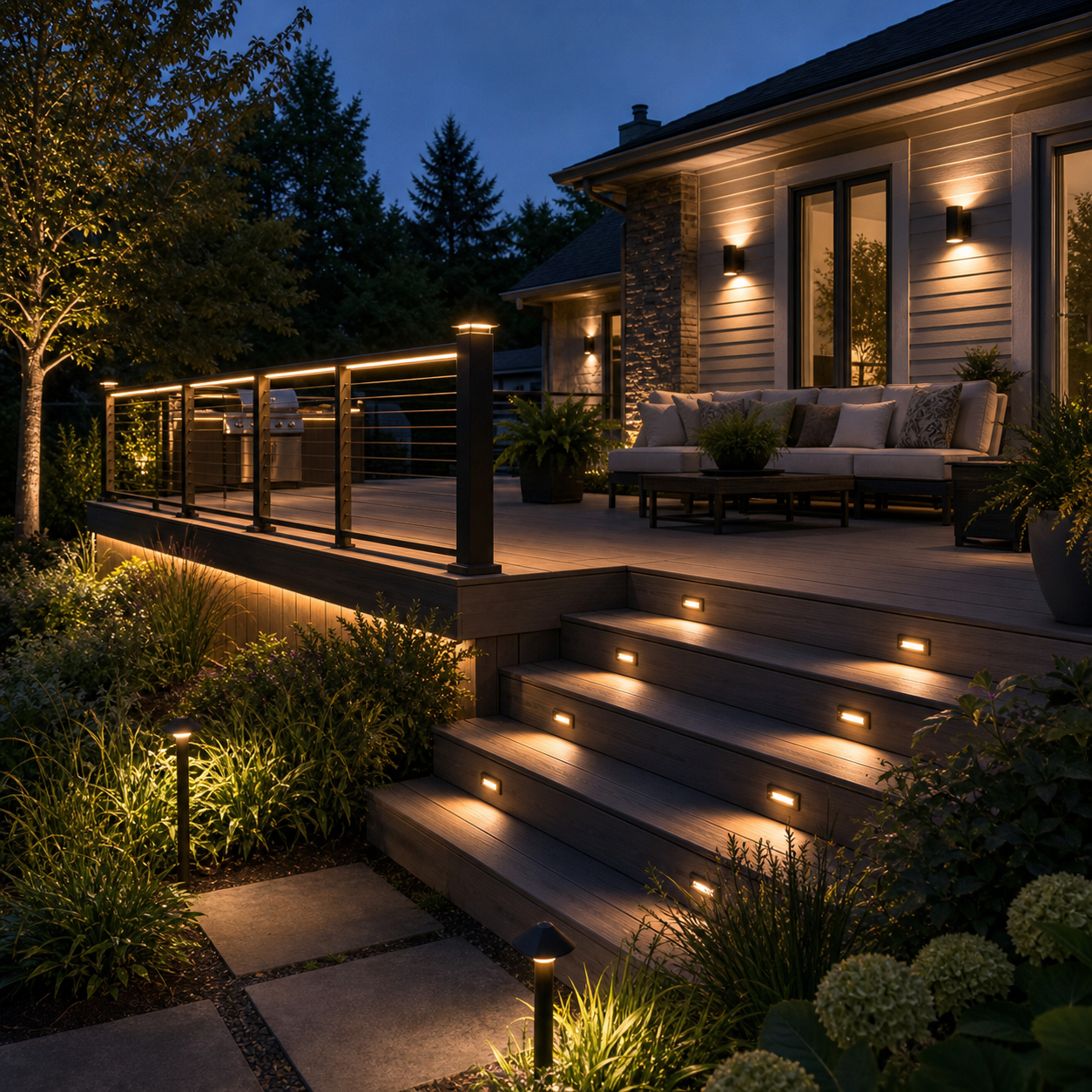
Illuminating Your Outdoor Space: Low-Voltage vs. Solar
A beautifully designed deck or patio shouldn't become unusable the moment the sun goes down. In Metro Atlanta, where mild evenings stretch well into the autumn, outdoor lighting is the crucial element that transitions your backyard from a daytime space to an evening retreat.
When it comes to landscape and deck lighting, homeowners typically face a fork in the road: grab a cheap pack of solar lights from the hardware store, or invest in a professionally installed hardwired low-voltage LED system. Let’s explore the technical and aesthetic differences between the two.
1. Solar Outdoor Lighting: The Quick Fix
Solar lights function via small photovoltaic panels integrated into the top of the fixture. During the day, they charge an internal battery, which powers an LED bulb at night via a photosensor.
The Drawbacks of Solar in Atlanta
While the idea of "free energy" is appealing, solar lighting comes with severe limitations for permanent outdoor living spaces.
- Dependence on Direct Sun: Many Atlanta backyards are heavily wooded. If your solar fixtures are placed under tree canopies, large retractable awnings, or shaded corners, they simply will not charge enough to last through the night.
- Dim and Fading Output: As the small internal batteries degrade over just a few months, the light output drops significantly. By 10:00 PM, many solar lights emit a faint, unhelpful glow.
- Cool/Harsh Color Temperatures: Many budget solar lights use cheap LEDs that emit a stark, blue-tinted light (often around 5000K-6000K), which destroys the warm, inviting ambiance of a luxury deck.
- Short Lifespan: Due to cheap plastic housings and failing batteries, solar path lights frequently end up in the landfill after just one or two seasons.
2. Low-Voltage LED Lighting: The Professional Standard
A low-voltage landscape lighting system involves hardwiring professional-grade fixtures (typically cast brass or heavy aluminum) to a central transformer. The transformer plugs into a standard 120V outdoor outlet and steps the power down to a safe 12 volts or 15 volts.
Why Low-Voltage Dominates Luxury Design
When you see a stunningly illuminated home exterior or a resort-style backyard, you are looking at a hardwired low-voltage system.
- Total Reliability: Because they are hardwired, these lights turn on at exactly the same time, every single night, with 100% brightness, regardless of whether it rained all day.
- Customized Ambiance (The 2700K Sweet Spot): Professional low-voltage LEDs allow you to choose the exact color temperature. We typically use 2700K (Warm White) LEDs to create a cozy, campfire-like glow that makes wood and composite decking look rich and inviting.
- Smart Control & Zoning: Modern transformers can be controlled via smartphone apps. You can set up distinct zones (e.g., turning off the bright landscape floods while keeping the subtle deck stair lights on).
- Safety and Code Compliance: Because the power is stepped down to 12V, the wiring is incredibly safe. It can be tucked under deck rails or buried shallowly in mulch without the risk of electric shock.
3. Key Components of a Low-Voltage System
If you're planning a deck build or renovation, understanding the components of a low-voltage system helps justify the investment:
- The Transformer: The brain and powerhouse of the system, calculating the load of the lights and managing the scheduling.
- Deck Post Cap Lights: Provide subtle downlighting to outline the perimeter of the deck.
- Stair Riser Lights: Critical for safety, casting light directly onto the treads of your deck stairs.
- Path and Uplighting: Landscape fixtures placed in the surrounding yard to highlight trees, stone walls, or gardens, adding depth to the nighttime view.
Frequently Asked Questions
How much does it cost to run low-voltage LED lights?
Surprisingly little! A typical LED landscape bulb uses only 2 to 4 watts of electricity. An entire backyard system with 20 fixtures might use less power than a single traditional 100-watt incandescent porch light. The impact on your monthly electric bill is usually just a few dollars.
Can I add low-voltage lighting to an existing deck?
Yes, though it is slightly more labor-intensive than installing the wiring during a new build. Professional installers can carefully route low-voltage wires under the deck framing and up through hollow posts or behind fascia boards to hide the wiring completely.
How long do the LED bulbs last?
Professional-grade low-voltage LED fixtures are typically rated for 30,000 to 50,000 hours of use. If run for 6 hours a night, that equates to roughly 13 to 22 years of life before the LED module needs replacement.
The Final Verdict
Solar lights serve a purpose as temporary, budget-friendly markers for a dark pathway. However, they simply cannot provide the reliable illumination, warm aesthetic, or safety required for a high-end outdoor living space. Investing in a professional low-voltage LED lighting system during your backyard renovation is the key to creating a true nighttime oasis.