Awnings
Retractable Awnings vs. Permanent Roofs
Compare costs, flexibility, and HOA considerations for your Atlanta patio shade project.
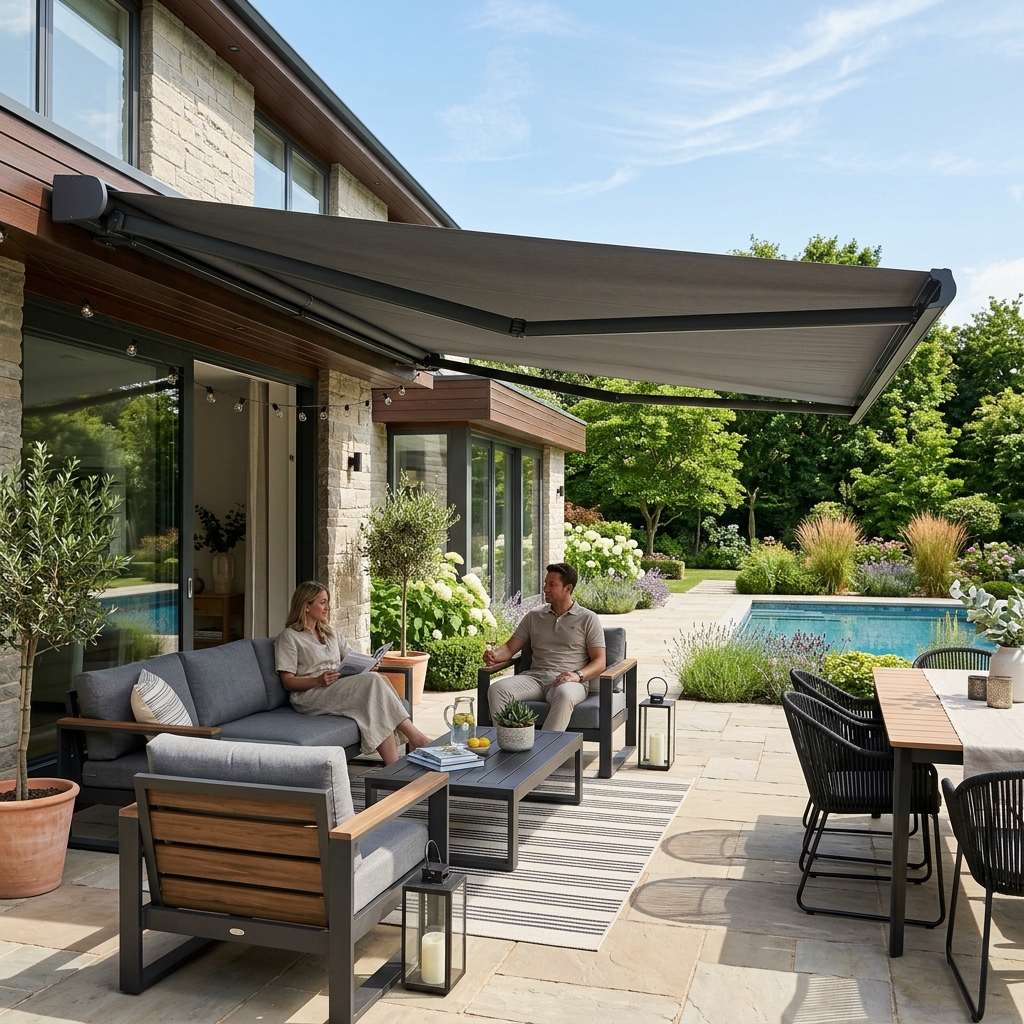
Finding the Right Shade Solution for Your Atlanta Home
If you've spent a July afternoon on an unshaded deck in Georgia, you know that the heat can quickly drive you indoors. A beautiful outdoor living space is useless if it's too hot to enjoy. When looking for shade solutions, homeowners generally debate between two heavyweights: building a permanent roof structure (like a covered deck or pavilion) or installing a motorized retractable awning.
While both provide excellent relief from the sun, they have vastly different impacts on your home's architecture, interior lighting, budget, and flexibility. Let’s compare the two options in detail.
1. Permanent Roof Structures (Covered Decks & Pavilions)
A permanent roof is exactly what it sounds like: a heavy, structural addition tied into your home's existing roofline or built as a standalone pavilion.
The Advantages of a Permanent Roof
- All-Weather Protection: Because it is a solid roof with shingles, you can sit outside during a torrential downpour without getting wet.
- Heavy Fixtures: The robust framing allows you to hang heavy ceiling fans, install infrared heaters, or mount a large outdoor television.
- Architectural Integration: When done correctly by a skilled contractor, a roof extension looks like an original part of the house.
The Drawbacks of a Permanent Roof
- The "Cave Effect": This is the biggest complaint homeowners have after building a covered deck. A permanent roof blocks the sun 365 days a year. This permanently darkens the interior rooms (like your kitchen or living room) that face the patio, making the house feel gloomy during the winter.
- High Cost: Building a roof requires architectural plans, foundation footings, framing, roofing, electrical, and gutters. Costs typically start at $20,000 and can easily exceed $50,000.
- Red Tape: Permanent structures require extensive county permitting, engineering reviews, and rigorous HOA approvals, pushing the timeline to several months.
2. Motorized Retractable Awnings
Modern retractable awnings are heavy-duty, lateral-arm systems wrapped in marine-grade acrylic fabric. At the push of a remote control button, they extend outward over your deck to block the sun, and retract completely out of the way when not needed.
The Advantages of Retractable Awnings
- On-Demand Flexibility: You control the weather on your deck. Extend the awning during the blistering afternoon heat, and retract it in the evening to stargaze or sit around a fire pit.
- Preserves Natural Interior Light: In January, when the sun is low and you want that natural warmth pouring into your living room windows, you simply leave the awning retracted. Your home's interior stays bright and cheerful.
- Significantly More Affordable: A premium, custom-fit motorized awning typically costs between $4,500 and $8,500—a fraction of the cost of a permanent roof.
- Faster Installation and Less Red Tape: Awnings do not require pouring new concrete footings. They can often be installed in a single day, and HOAs usually approve them quickly because they aren't permanent architectural changes.
The Drawbacks of Retractable Awnings
- Not for Severe Weather: While high-quality awnings can handle light rain, they must be retracted during heavy downpours, severe thunderstorms, or high winds (though modern awnings have automatic wind sensors that retract them for safety).
- No Heavy Fixtures: You cannot hang a ceiling fan or a television from a retractable awning.
Frequently Asked Questions
How long does an awning fabric last in the Atlanta sun?
Premium awnings use solution-dyed acrylic fabrics (like Sunbrella). The color is baked into the fibers, meaning it won't fade like cheaper canvas. You can expect a high-quality awning fabric to last 10 to 12 years before needing a simple fabric replacement.
Do I need a permit to install a retractable awning?
In most Metro Atlanta counties, residential retractable awnings attached to existing structures do not require a building permit. However, if you live in a community with an HOA, you will still need their architectural committee's approval.
Can an awning withstand heavy wind?
Awnings are primarily designed for sun protection, not storm protection. However, premium motorized models are equipped with motion sensors. If the wind picks up and jostles the awning past a safe threshold, the motor automatically retracts the unit to protect it from damage.
The Smart Choice for Shade
If you have an unlimited budget, plan to sit outside in a thunderstorm, and don't mind permanently losing natural light in your home, a roof structure is a fantastic addition. However, for the vast majority of homeowners who simply want reliable relief from the afternoon sun while maintaining a bright interior and a reasonable budget, a motorized retractable awning is the superior choice.